Why a blockchain transfer is not automatically a cross-border capital flow
Project Atlas combined exchange information with blockchain data to explore the geography of crypto activity and its measurement limits.
From the archive · 4 Oct 2023
A retrospective written for Chain Perspective. It describes the source at that date and does not imply current availability or status.
Reported development: · AI-assisted, source-linked brief
In brief
- The proof of concept combined on-chain and off-chain information.
- Exchange location served as a proxy, not a complete map of users.
The development
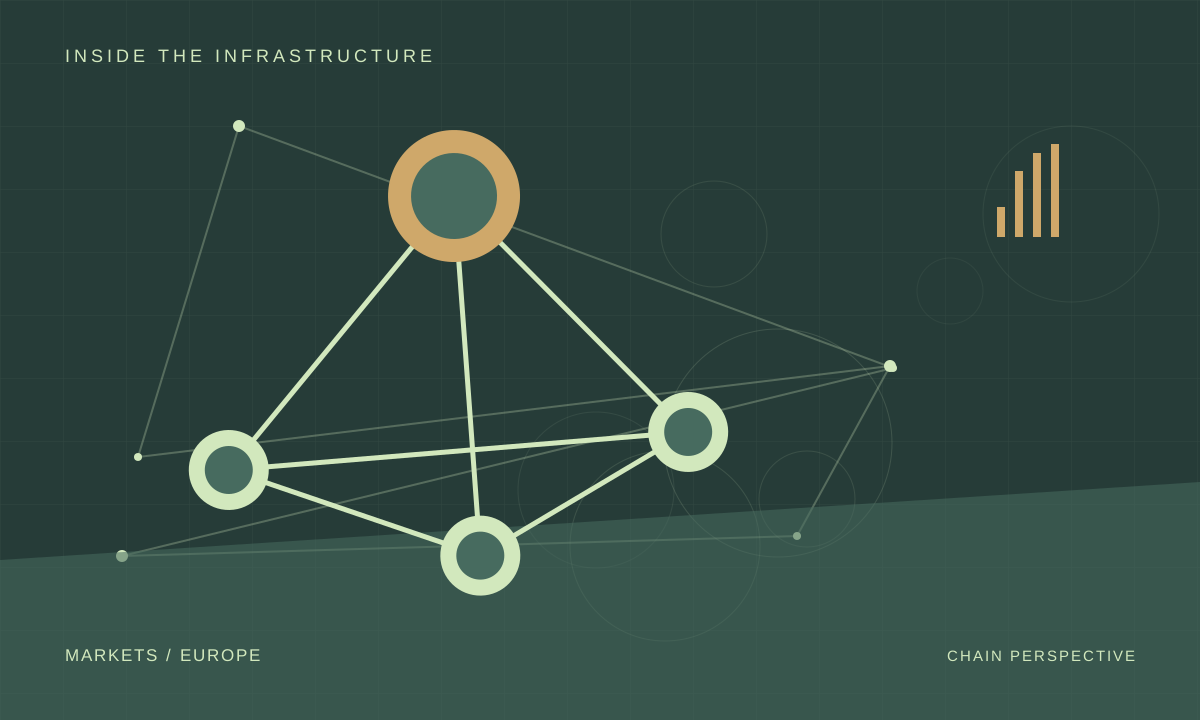
Project Atlas, described by the BIS in October 2023, brought together the BIS Innovation Hub, De Nederlandsche Bank and the Bundesbank. The proof of concept combined public blockchain information with data about crypto exchanges. Its initial work used transfers between exchanges on the Bitcoin network and the location of those exchanges as a proxy for cross-border capital flows.
Why it matters
The word proxy matters. An observable transaction and the economic location of the people behind it are different kinds of information. Atlas highlights why impressive blockchain totals need a clear methodology before they become claims about national economies. The project focused on data collection and platform development. It is useful context for reading crypto statistics, rather than a complete measurement of every country’s holdings or every international transfer.
Sources and verification
Based on an official announcement
Based on the dated primary source. This retrospective does not establish current availability or subsequent outcomes.
- Project Atlas ↗Bank for International Settlements · Primary document · 4 Oct 2023
Prepared with AI assistance from the linked sources. This is not a claim of independent field reporting or human review. How we publish · Report a correction
Keep up with markets
Follow this subject in your news reader, or explore more of our source-linked coverage.
No account or email address required.